
Classification of Fire: How Many Types of Fire Are There?

What's your first instinct when you see a fire? For most of us, it's to douse it with water. For a burning log or piece of paper, that works perfectly.
But what if it's a grease fire on your stovetop? Using water is a catastrophic mistake that can cause burning oil to violently splash across your kitchen. The same is true for an electrical spark, where water creates a risk of severe shock.
For professional support, explore firefighting and fire protection systems for facilities and sites in Pakistan.
These dangerous exceptions are why a formal classification of fire exists. Understanding the different fire types explained in this system is the single most important step toward knowing exactly how to react and keeping a small problem from becoming a disaster.
What Is a Class A Fire? Your Guide to "Ash-Producing" Fires
The most common type you'll encounter in the classification of fire is Class A. An easy way to remember it is that A is for Ash. These fires involve ordinary solid combustible materials that, as the name suggests, leave behind an ash.
Think of common items that fit this description:
- Wood
- Paper & Cardboard
- Cloth
- Trash
- Most plastics
For these fires, your instinct is usually correct—water is the best extinguishing agent because it cools the fuel. The official NFPA symbol for this class is a green triangle with the letter 'A'. When the fuel isn't a solid, however, the danger escalates.

Fighting Flammable Liquids: Understanding Class B Fires
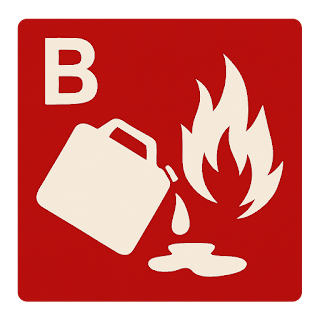
While water is the hero for a Class A fire, using it on a Class B fire is one of the most dangerous mistakes you can make. The fuel is the key difference; Class B fires involve flammable and combustible liquids, such as gasoline, oil, grease, or paint. The fire safety symbol for this class is a red square with the letter 'B'. Think B is for Barrel or Boiling Liquids.
Pouring water onto a liquid fire has a disastrous effect. Because water is denser than oil, it sinks to the bottom of the container, where it instantly flash-boils into steam. This expansion violently throws the burning liquid out, spreading the fire in seconds.
Instead of cooling it, the goal is to smother a Class B fire by cutting off its oxygen supply. This is why placing a metal lid over a burning pan works—it suffocates the flames. This reactive danger with water also applies when electricity is involved.
How to Safely Handle a Class C "Current" Fire
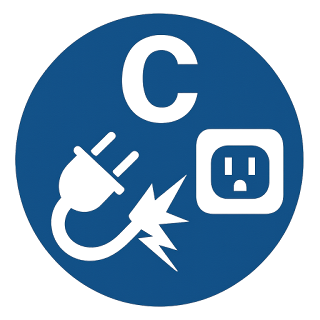
The risk with electrical fires isn't just the flame—it's the electricity. These are Class C fires, where the 'C' stands for Current. They involve energized electrical equipment, from a sparking appliance to an overloaded power strip. Using the wrong approach can be deadly.
Spraying water on a Class C fire is life-threatening. Because water conducts electricity, it can create a pathway from the live circuit straight back to you, causing a severe or fatal electric shock. Your first step, before even thinking about an extinguisher, is to de-energize the source if you can do so safely—unplug the device or shut off the power at the circuit breaker.
Once the power is off, the fire often becomes a simple Class A or B fire. If you can't cut the power, you must use an extinguisher with a 'C' rating.
The Kitchen Fire Rule: Why Grease Fires Need a Special Class K
While cooking oils are flammable liquids like in Class B, they burn at far higher temperatures. This unique danger led to the creation of Class K—with the 'K' for Kitchen. These intense fires require a special approach, which is a key part of any kitchen fire safety guide.
So, can you use water on a grease fire? Absolutely not. When water hits super-heated oil, it instantly vaporizes and expands. This mini-explosion launches a fireball of burning grease from the pan, turning a small problem into a devastating one.
For a small fire, your safest action is to slide a lid over the pan to smother it and turn off the heat. Never move the pan. For larger fires, a Class K fire extinguisher is necessary. Its agent cools the blaze and reacts with the oil, turning the fuel into a non-flammable, soapy barrier.
Decoding the Label: How to Choose the Right Fire Extinguisher
With an understanding of the fire classes, the letters on an extinguisher label suddenly make sense. They tell you which types of fire the unit can fight. An extinguisher marked 'BC' is effective on flammable liquids and electrical fires but useless for a fire involving paper or wood (Class A).
For general home use, a multi-purpose "ABC" extinguisher is the most recommended choice. Its dry chemical agent is effective against the three most common household threats: trash/wood/paper (A), flammable liquids (B), and electrical fires (C). This versatility makes it the gold standard for residential safety. You can also find essential fire safety supplies for homes and workplaces.
The National Fire Protection Association (NFPA) recommends at least one extinguisher on every floor. Prioritize accessible locations like the kitchen or garage, ensuring it's mounted away from potential fire sources like the stove, so you can always get to it safely.
Your 3-Step Action Plan for Home Fire Preparedness
You now have the knowledge to protect your home. Turning that knowledge into action is simple with this immediate plan.
Your 3-Step Fire Safety Plan:
- IDENTIFY your risks by spotting potential A, B, and C hazards in each room.
- GET the right tools: an all-purpose ABC extinguisher for a central area and a metal lid for kitchen fire safety.
- KNOW the plan: For small fires, use the right method; for any large or spreading fire, get out, stay out, and call 911.
Browse fire protection products to match your risk areas (A, B, C, and K).
You no longer see just 'fire'; you see its fuel and know the correct response. This awareness is the foundation of preparedness. Choosing the right extinguisher and knowing your plan transforms potential panic into confident action, making your home a safer place.